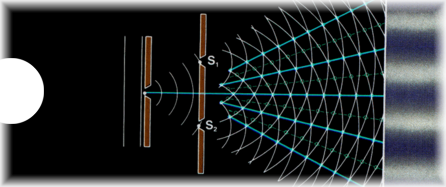
 Here’s a delicious contradiction: sometimes, light is a wave and sometimes it behaves like a stream of particles. We think of light as the visible spectrum that gives us color and makes darkness go away. Scientists see a much broader spectrum of electromagnetic radiation spanning from very long radio waves to very short gamma waves. Science describes light as an Electromagnetic Spectrum varying in wavelength (the distance between wave peaks) and frequency. | ||
|
How was the speed of light measured?
In 1728, James Bradley used stellar aberration—the apparent shift in star positions caused by Earth's orbital motion—to refine the speed calculation. In 1849 Hippolyte Fizeau shone a bright light through a rapidly spinning toothed wheel to a distant mirror eight kilometers away and timed the round trip.
|
Let's dig down into this
|
|
| |
 |
 |
| no nonsense privacy policy sitemap | |

| Nimda content administration system written by Michael Potts file updated 26 August 2026 copyright © 2003-2026 Caspar Institute |
| this site generated with 100% recycled electrons | |

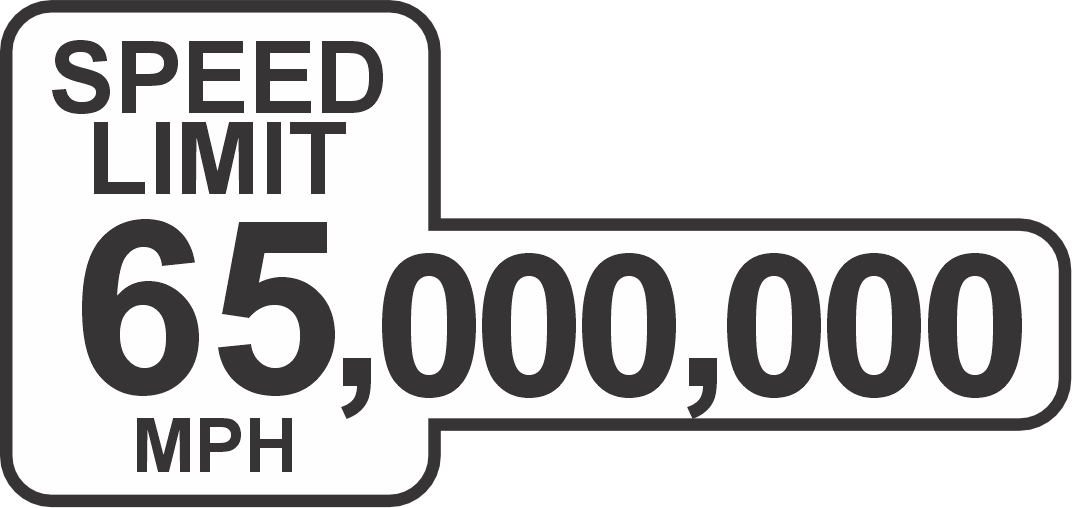 Light transports energy at a constant speed of 299,792,458 meters per second (186,282 miles per second). (That's fast. It is also, far as we can tell, the universal speed limit.)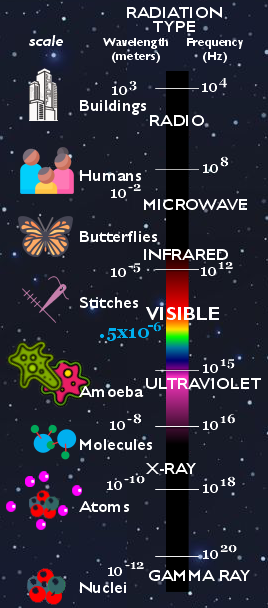
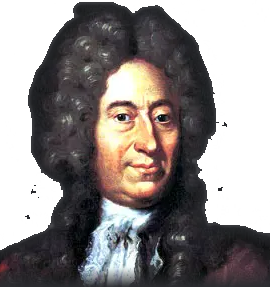 In 1676, Ole Rømer timed eclipses of Jupiter’s
 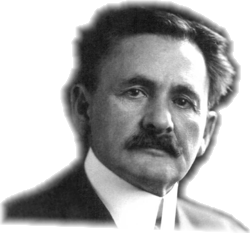 Between 1826 and 1931, Albert Michelson used precisely rotating mirrors between mountain stations to improve measurement accuracy.